2026-09-22
Discovery by Example
In my last essay, I argued that the biggest bottleneck to AI adoption is discovery. The system can do almost anything, but it needs you to already know what to ask for. Somehow, the interface has to start showing you the sky.
The people who tinker find their own way. They try things, follow dead ends, and occasionally discover something useful enough to change how they work. Everyone else gets some of that knowledge secondhand: a video, a coworker, a friend who says, “You should try this.”
But as AI gains capabilities, there’s more to discover. Learning what a tool could do six months ago doesn’t tell you what you could be doing with it now.
I’ve come to think discovery is mostly a problem of imagination, and nobody imagines from nothing. Ask someone what an AI could do for them and you’re asking them to invent from a blank page. Almost no one can. Show them one concrete example and something different happens. They start adjusting it: right idea, wrong subject. Right source, wrong people. The example gives them something to work with, and working with it is how they find what they actually want.
We’ve been trying to build that into an interface. Instead of asking what you want the AI to do, we ask what you want to keep an eye on. The first question stumps people. The second has answers: sales, a competitor, emails that need a reply. So we built widgets. Each one watches something and keeps it up to date in your workspace.
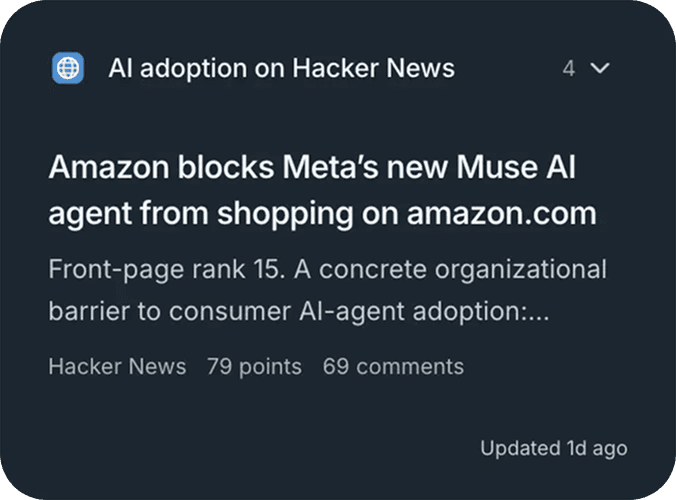
To show people how this might fit their own work, we made personalized examples. We read their website and mocked up a board of widgets around what they do, with sample data.
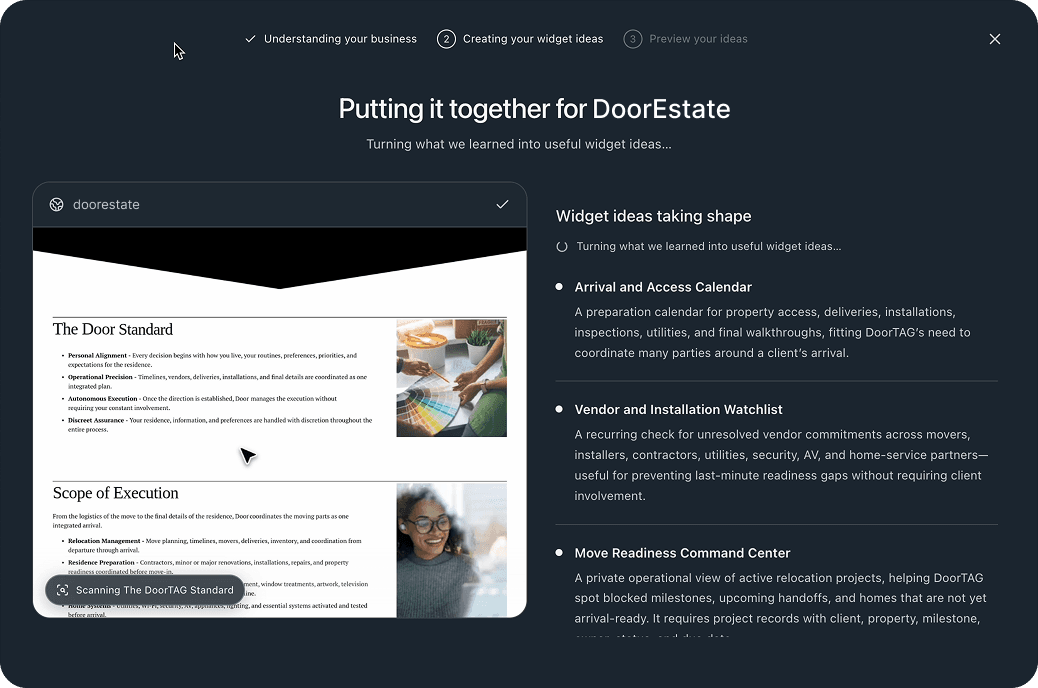
One of the people we showed these to was Cassandra, who runs businesses in executive relocation and land-use consulting in Las Vegas. One widget got her thinking about how to introduce herself to potential clients. Another, a map of development news, brought up projects she’d learned about too late: a cleared corner in her neighborhood, a construction company arriving in town, new towers in Henderson. Within minutes she was describing what she’d want to know and listing other things she could track.
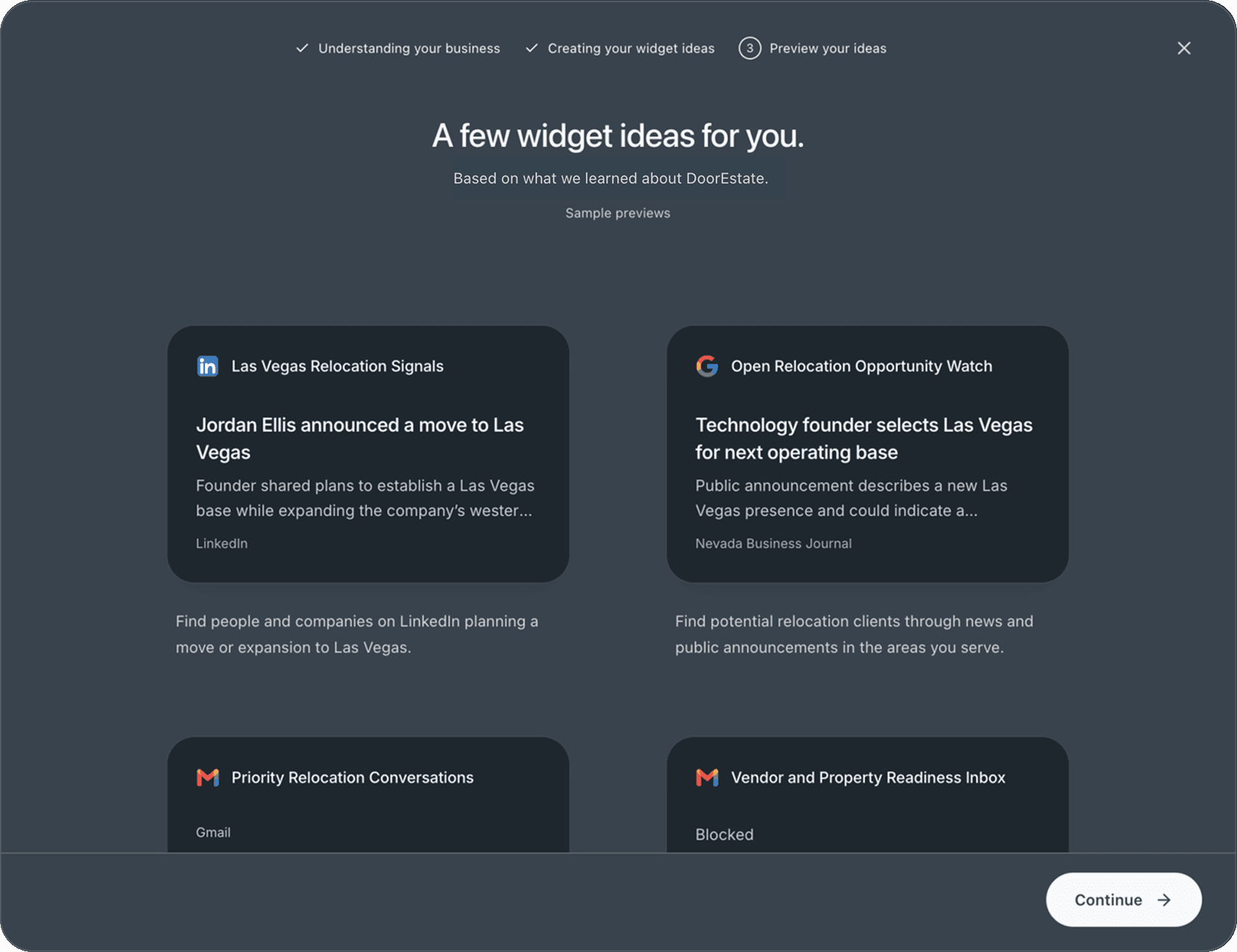
She went home and built one. Six hours later she emailed us: a manufacturer had announced two months earlier that it was relocating to her city, she hadn’t known, and she’d already set a 30-day plan.
The examples didn’t have to capture exactly what she wanted. They were concrete enough for her to see her own business in them, and that’s what let her make the connections herself.
Michelle, a realtor Cassandra referred to us, saw an example about local knowledge and immediately connected it to the community events she gathers for her newsletter. Nothing we’d shown her was about newsletters.
An example helps someone imagine a use you never showed them. Understand one widget that watches a topic and you can imagine it watching another. Swap the source, the subject, or the people, and a new use appears. A small, specific example hands someone a manageable piece of a much larger capability, and they can extend it without first understanding everything the system can do.
A recommendation can be useful even when someone doesn’t choose it. We might show them ten widgets and help them imagine an eleventh that fits their work better.
So the recommendation panel puts the examples next to an open field: what would you like to keep an eye on? The examples get the ideas started, and the field gives them somewhere to go before they fade.
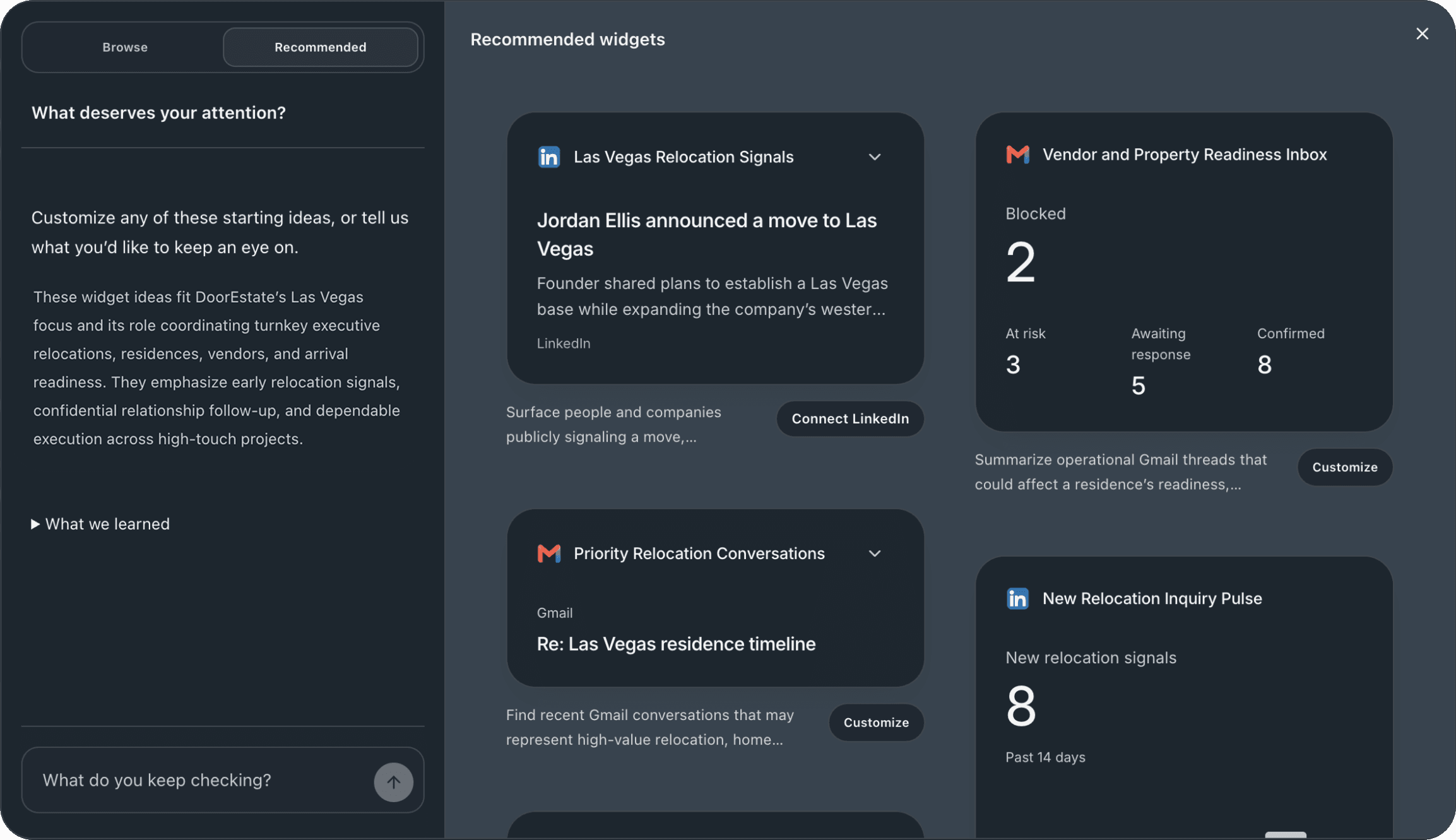
These are early conversations, but the moment that stays with me is when someone starts describing a use we never showed them. The example didn’t give them the idea. It gave them enough to have one of their own.
That’s what I want an interface to make possible: help people see enough of what the system can do that they begin to see what they could do with it.